
-
OFFICIAL-SENSITIVE Information: What Happens Before and After Secure Sharing?
Read more: OFFICIAL-SENSITIVE Information: What Happens Before and After Secure Sharing?A defence SME wins a place on a new programme. It is the sort of contract the business has been working towards for years: credible customer, meaningful scope, and a chance to strengthen its position in the defence supply chain. The programme is already moving at pace. There are documents to review, drawings to amend,…
-
From data visibility to decision confidence
Read more: From data visibility to decision confidenceMany organisations want better visibility of their data. The aim is understandable. Leaders want clearer reporting, better dashboards, stronger management information, and a more accurate view of performance, risk, delivery, operations, or demand. But visibility on its own is not enough. Visibility is not the same as trust A dashboard can be easy to read…
-
Cyber Resilience Is What Makes Transformation Sustainable
Read more: Cyber Resilience Is What Makes Transformation SustainableDigital transformation in regulated organisations is very rarely a clean break from the past, more a negotiation with what already exists: legacy systems, inherited processes, supplier dependencies, regulatory duties and operating models that cannot be paused while a new environment is built. That reality often leads cyber resilience and transformation to be presented as competing…
-

Applying CAF in Live Environments
Read more: Applying CAF in Live EnvironmentsThe National Cyber Security Centre (NCSC) Cyber Assessment Framework (CAF) helps organisations assess and improve cyber resilience through structured objectives, principles, contributing outcomes and indicators of good practice. It provides a consistent basis for assessing whether essential services are adequately protected, particularly where essential functions and regulatory assurance are in scope. On paper, CAF offers…
-
Cyber Essentials vs ISO 27001 vs NIST
Read more: Cyber Essentials vs ISO 27001 vs NISTOrganisations are often presented with Cyber Essentials, ISO 27001 and NIST as if they are comparable options. They are not. Each exists for a different purpose, operates at a different level, and delivers a different outcome. The confusion tends to arise because all three are associated with ‘good security’, yet none of them, on their…
-
When Engineering Change Does Not Reach the Whole Supply Chain
Read more: When Engineering Change Does Not Reach the Whole Supply ChainEngineering change is a normal part of defence manufacturing. Designs mature, requirements evolve, components become unavailable, production issues emerge, and customer needs shift as a programme progresses. A change may begin as a technical adjustment, but its effects rarely stay confined to engineering. A revised drawing can affect work instructions, inspection criteria, supplier activity, production…
-
Cyber Risk Management: An Overview for Government Suppliers
Read more: Cyber Risk Management: An Overview for Government SuppliersCyber risk management in the public sector is not a documentation exercise. It is a way of making better decisions about services, systems, suppliers and information that matter.
-

What is IPSA? Personnel security assurance for defence suppliers
Read more: What is IPSA? Personnel security assurance for defence suppliersIPSA is an organisational assurance framework for personnel security in industry. Its purpose is to help eligible organisations in the defence supply chain manage personnel security to the standards expected when people hold or require National Security Vetting.
-
COMAH Compliance Isn’t the Same as Control
Read more: COMAH Compliance Isn’t the Same as ControlWhere process safety and cyber risk start to blur There’s a common assumption in COMAH environments that if the safety case is in good shape, the risk is understood and under control. The documentation is there, the systems are defined, the safeguards are in place. That assumption made more sense when control was largely mechanical…
-

Delivery Methodologies for Secure Environments
Read more: Delivery Methodologies for Secure EnvironmentsAgile, Waterfall or Pragmatic? Delivery methodology is a hot topic in most project environments, but in defence and secure government programmes, it takes on a different weight. This isn’t just about which framework you favour, it’s about how you adapt that framework to meet the demands of a risk-conscious, process-heavy environment that prizes assurance as…
-

The Security Decisions Hidden in Delivery
Read more: The Security Decisions Hidden in DeliveryWhy cyber risk is often decided before the security conversation begins Most cyber security conversations start too late. By the time a project reaches formal assurance, many of the most important decisions have already been made. Suppliers have been selected. Delivery milestones have been agreed. Commercial pressures are in motion. Architecture choices have hardened into…
-

How can companies effectively respond to a cybersecurity incident?
Read more: How can companies effectively respond to a cybersecurity incident?The worst time to design an incident response process is during a live incident. At that point, the organisation is under pressure, facts are incomplete, systems may be unavailable and senior leaders may be asking for certainty that no one can honestly provide. A good response depends on preparation. A cyber incident response plan should…
-
What is DEFCON 658? Cyber obligations for MOD suppliers
Read more: What is DEFCON 658? Cyber obligations for MOD suppliersDEFCON 658 is one of those terms that appears in MOD procurement and immediately sends suppliers looking for a plain-English explanation. That is understandable. It is not a cyber framework in the usual sense. It is a defence condition: a contractual mechanism that brings cyber security obligations into MOD supplier relationships. Where DEFCON 658 applies,…
-
OFFICIAL vs OFFICIAL-SENSITIVE: what defence suppliers need to know
Read more: OFFICIAL vs OFFICIAL-SENSITIVE: what defence suppliers need to knowFor organisations working with the Ministry of Defence, OFFICIAL and OFFICIAL-SENSITIVE are not just labels on documents. They shape how information is shared, who can access it, how it is stored, and what level of assurance may be expected from the working environment around it. The confusion usually starts with the wording. OFFICIAL-SENSITIVE can sound…
-
Logiq ranked #19 in Insider Media’s South West 250
Read more: Logiq ranked #19 in Insider Media’s South West 250Bristol, UK – 18 June 2026 – Logiq has been recognised in Insider Media‘s 2026 South West 250, securing the 19th position in the ranking of the region’s leading privately-owned businesses. The South West 250 celebrates organisations driving the regional economy through employment, investment and sustained commercial success. Spanning a broad range of sectors, the…
-

Industry 4.0 Connected the Factory. The Supply Chain Is Harder.
Read more: Industry 4.0 Connected the Factory. The Supply Chain Is Harder.Manufacturers have spent much of the past decade improving connectivity inside their own organisations. Digital engineering tools have changed how products are designed and developed. ERP and planning systems have improved coordination across production. Quality platforms have made evidence and traceability easier to manage. Connected production environments, sensors, automation and data-led improvement programmes have become…
-

Logiq recognised among the UK’s leading Cyber Security consulting firms
Read more: Logiq recognised among the UK’s leading Cyber Security consulting firmsBristol, UK – 11 June 2026 – Logiq has once again been recognised by Consultancy UK as one of the UK’s leading consulting firms for cyber security services. The annual ranking highlights consulting firms operating across the UK market and reflects the breadth of expertise available to organisations seeking support with complex cyber security challenges.…
-
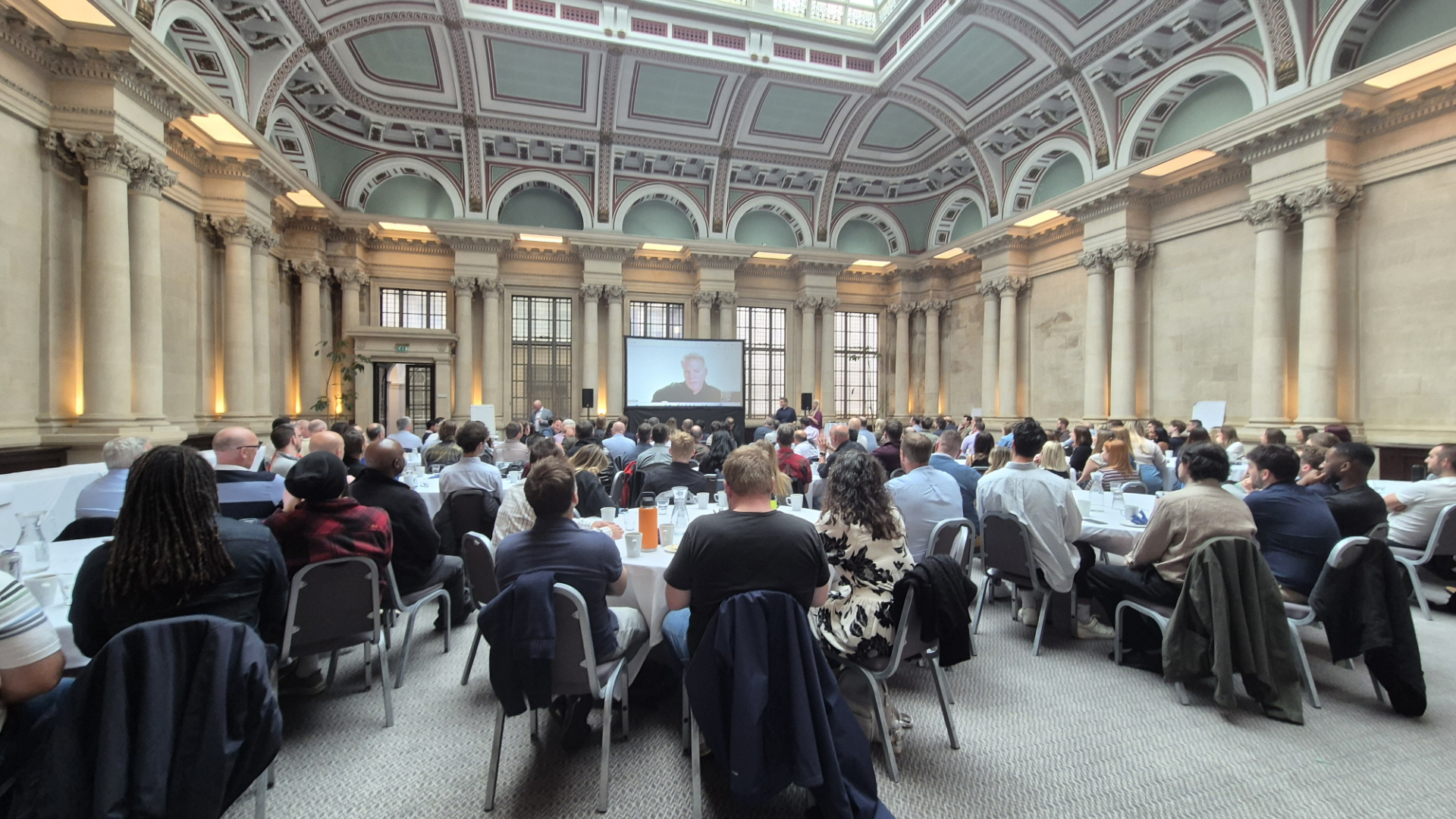
More than 200 colleagues come together for Logiq’s summer offsite
Read more: More than 200 colleagues come together for Logiq’s summer offsiteThis week, colleagues from across Logiq gathered at the Bristol Harbour Hotel for our annual Summer Offsite. The event brought together more than 200 members of the team, including our newly onboarded Savient colleagues, for an afternoon of business updates, shared successes and a look ahead as the business continues to grow. Opening the session,…
-
Secure Collaboration and the Modern Defence Supply Chain
Read more: Secure Collaboration and the Modern Defence Supply ChainFor organisations fresh to the defence sector, one of the first barriers to entry is not cyber security in the conventional sense, but secure collaboration. In many sectors, collaboration is viewed primarily as a productivity challenge. Within defence, it is a security and an assurance challenge as well. Before any work can begin, organisations may…
-

Recognising Phishing Attempts
Read more: Recognising Phishing AttemptsPhishing guidance is often taught using obvious examples, poorly worded messages from implausible senders, urgent requests that seem transparently suspicious. Real phishing, however, rarely looks like that. Modern attempts are built around legitimacy: they imitate suppliers, internal systems, collaboration platforms, and normal business processes closely enough to pass a quick glance. Rather than judging a…

INSIGHTS
Clear, practical insight on the topics shaping secure and regulated work — from company news and everyday cyber guidance to deeper analysis of frameworks, delivery and emerging requirements.